
Last updated October 15, 2026
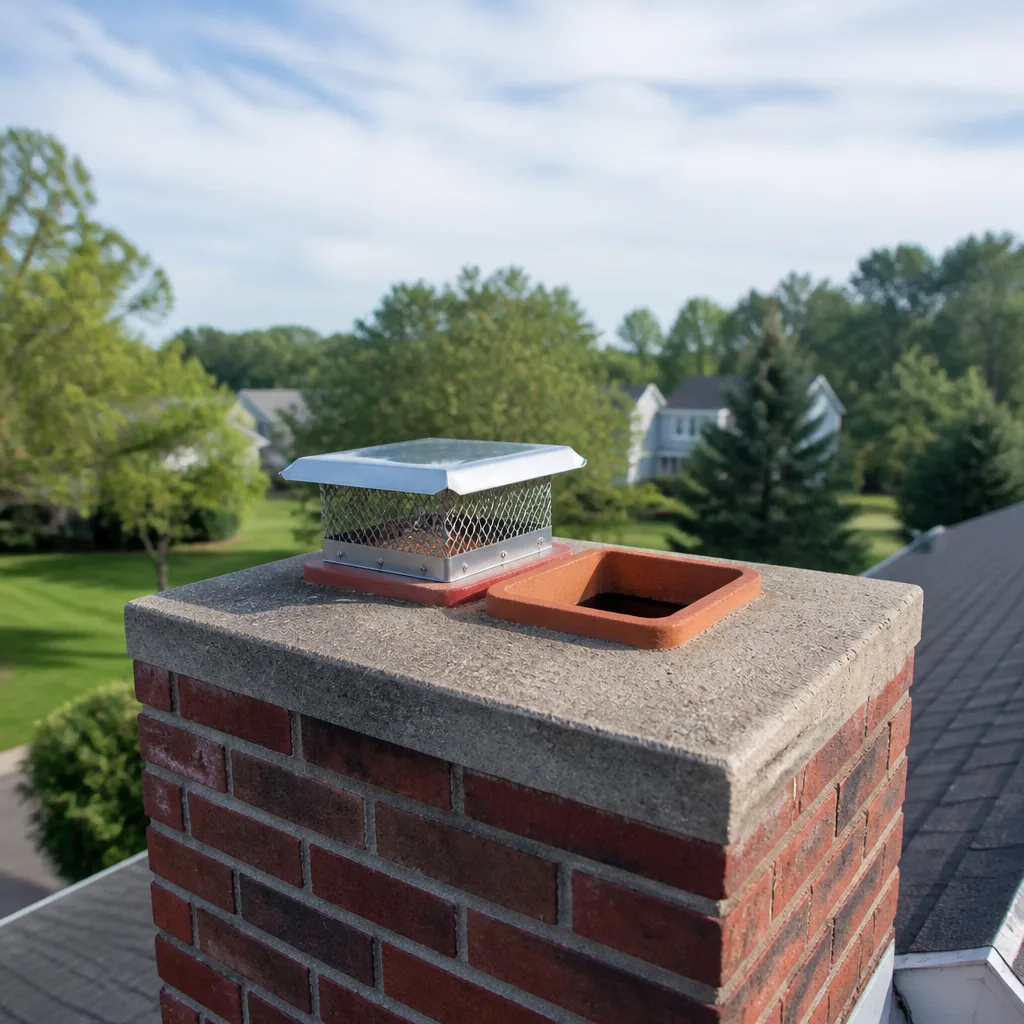 Sweep & inspection
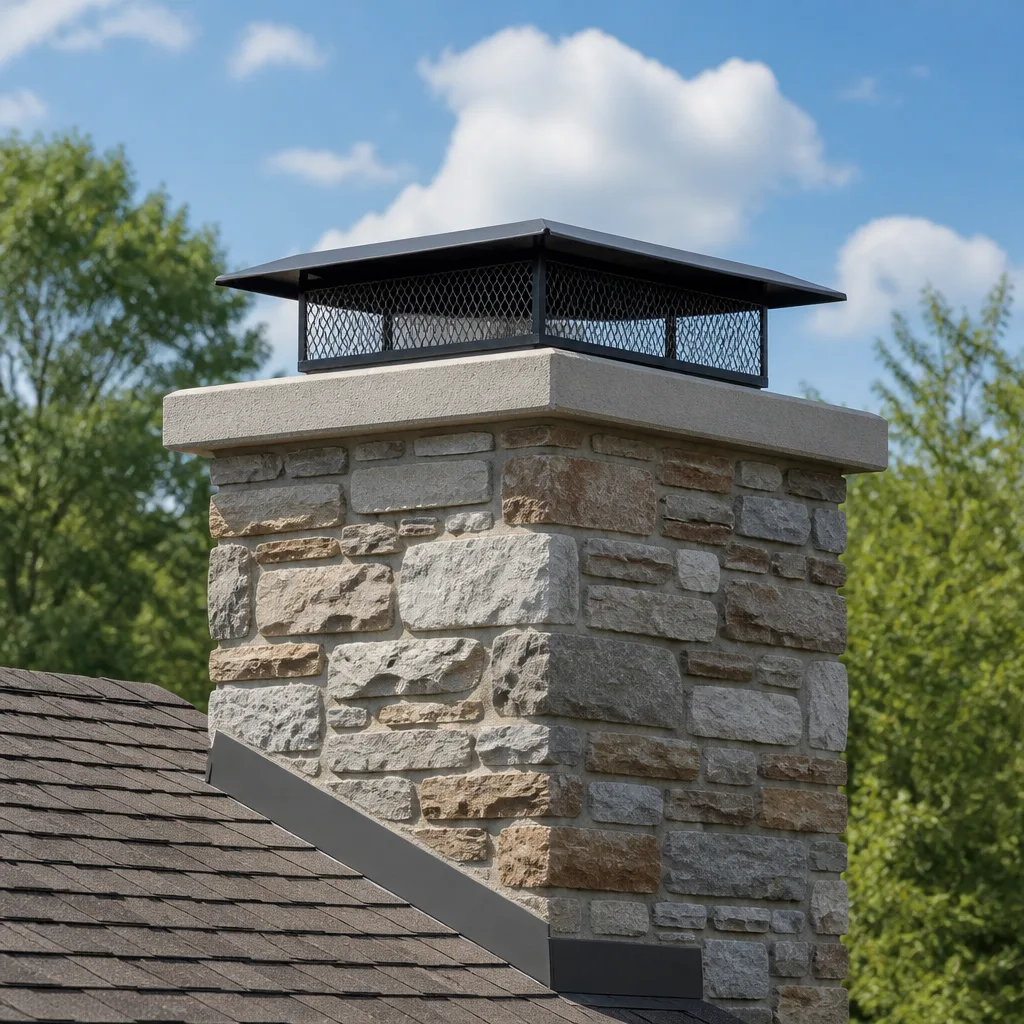 Caps & crowns
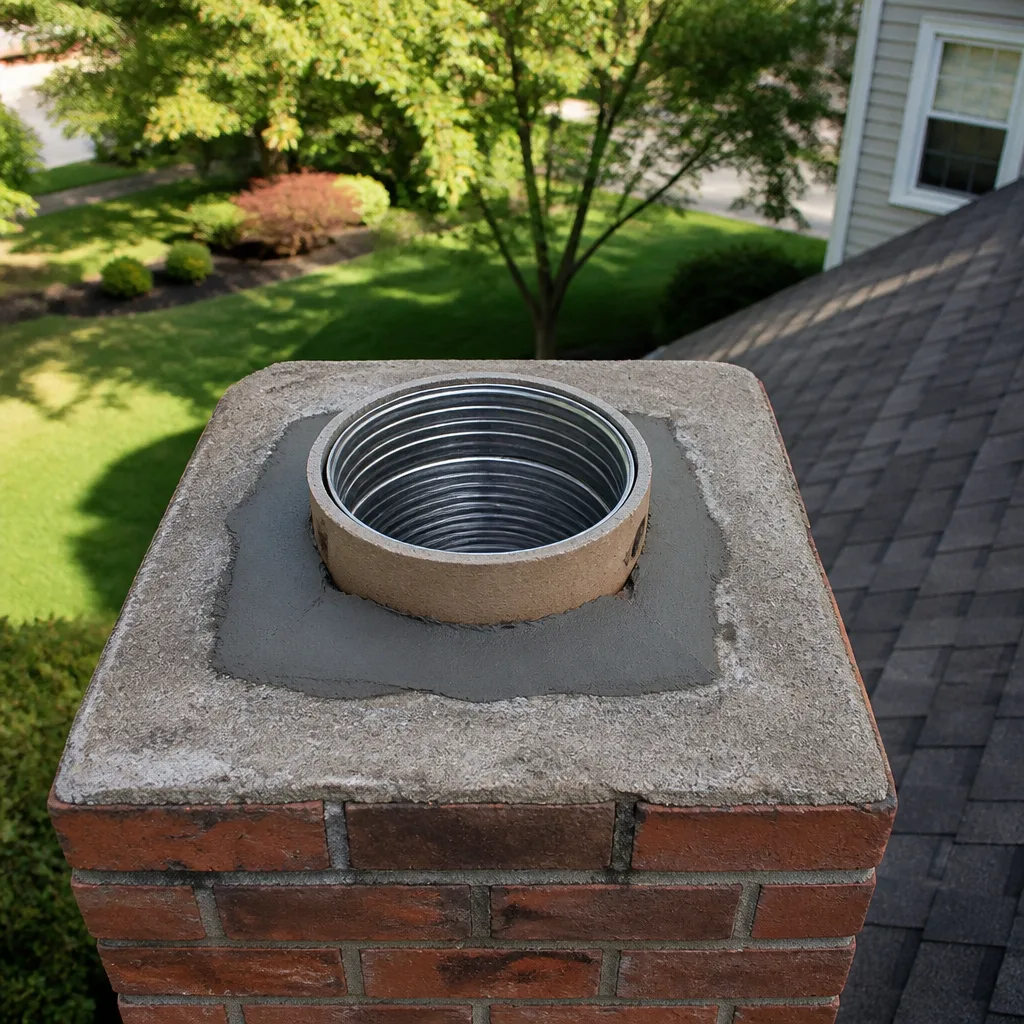 Flue relining
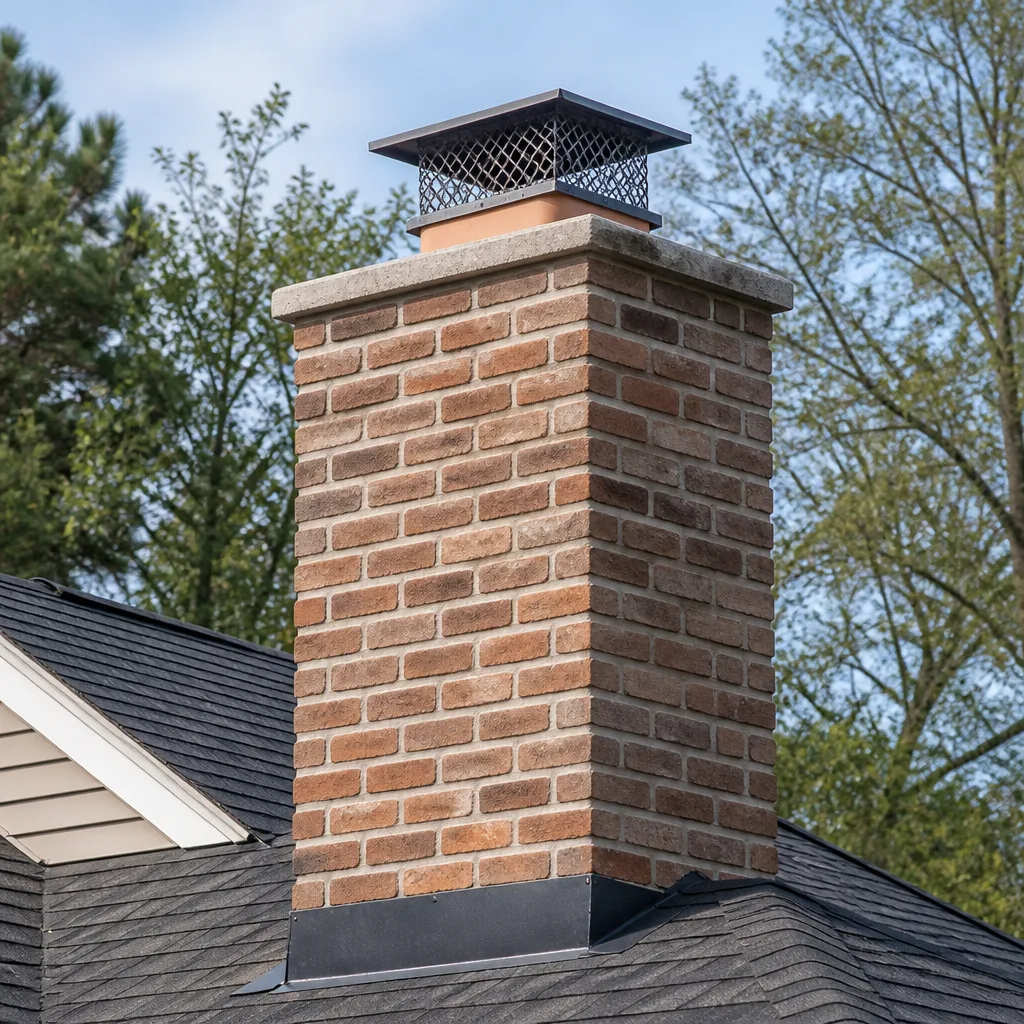 Masonry repair
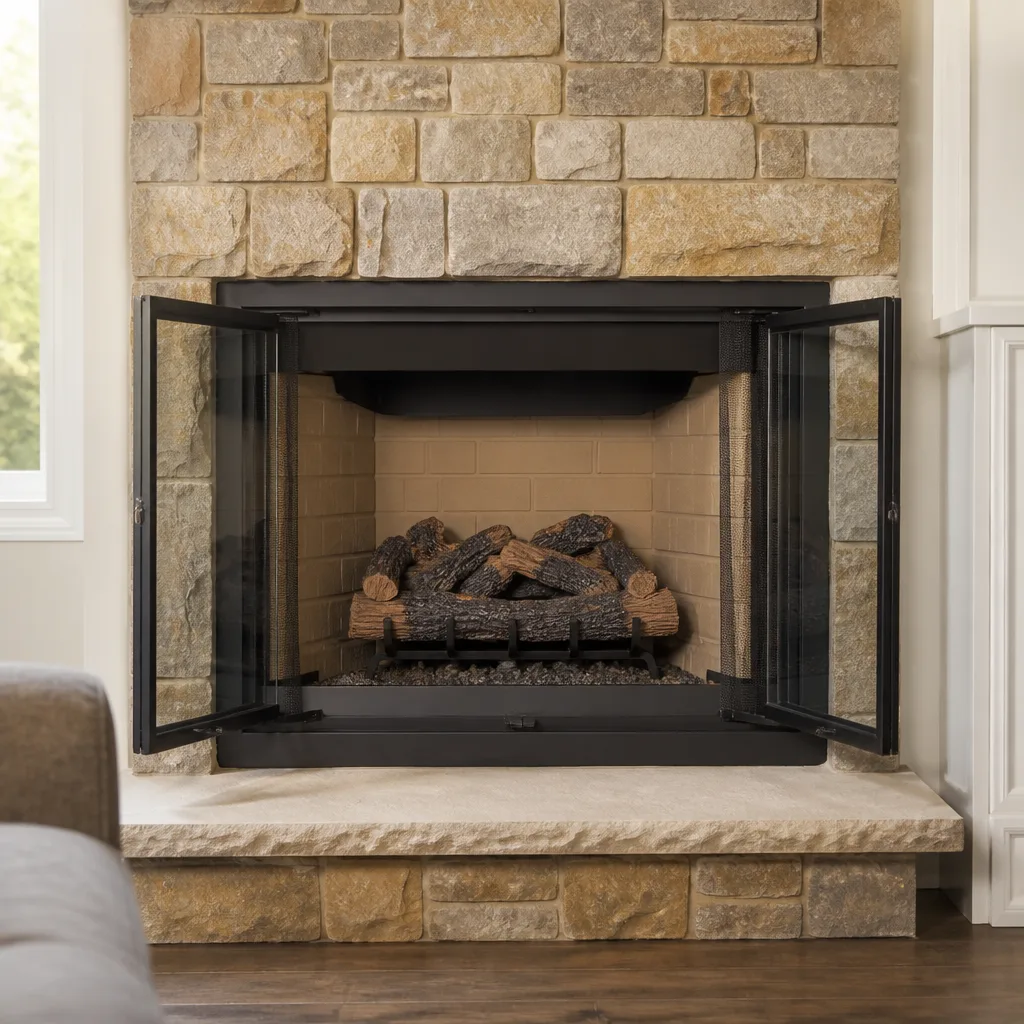 Gas fireplace service
Level 1 sweep and inspection to the NFPA 211 annual standard - flue, crown, cap, and flashing checked and photographed
Chimney sweep logs do not sweep chimneys. They loosen some creosote - which then falls where a brush and vacuum still have to collect it.
Chimney Cleaning Warning Signs: A Houston Homeowner’s Reference Guide
Here’s something most Houston homeowners don’t realize: your chimney tells you when it needs help, and it usually starts talking months before the problem becomes dangerous. The white crust forming on your exterior brick isn’t a cosmetic quirk. The musty smell drifting from the fireplace in August isn’t normal summer humidity. The rust on your damper isn’t just age. In our experience sweeping thousands of Houston chimneys since 2002, we’ve learned that every serious chimney failure announces itself early, through symptoms anyone can spot from the living room floor or the backyard. This guide translates ten specific warning signs into plain language: what causes each one, how serious it is, and whether you need a sweep this week or just a note on next season’s Chimney Sweep Maintenance Checklist for Houston Homeowners. By the time you finish reading, you’ll know more about diagnosing your chimney than most homeowners learn in a lifetime, and you’ll know exactly when to call a professional in Houston.
Styles & brands we work with
Quick Answer
Chimney cleaning warning signs in Houston fall into two categories: fire and carbon monoxide hazards that require immediate professional attention (smoke entering the room, dark oily creosote buildup, audible animal activity in the flue, flaking brick in the firebox), and maintenance items you can safely monitor (minor efflorescence, light surface rust, occasional mild odor after heavy rain). A standard chimney sweep in Houston runs $189 to $329, and any symptom involving smoke, gas, or structural flaking inside the firebox means the fireplace should not be used until a certified sweep inspects it. Call Chimney Sweep in Houston at (325) 750-6259 if you’re seeing any fire-related warning sign.
Table of Contents
- Symptom #1: Smoke Entering the Room Instead of Going Up the Flue
- Symptom #2: Persistent Odor Coming From the Fireplace, Especially in Summer
- Symptom #3: Visible Rust on the Damper or Firebox Components
- Symptom #4: White Staining on Exterior Brick (Efflorescence)
- Symptom #5: Flaking Material Inside the Firebox
- Symptom #6: Animal Sounds, Droppings, or Nesting Material
- Symptom #7: Dark, Oily, or Crusty Buildup You Can See or Smell
- Symptom #8: Damaged or Missing Chimney Cap or Crown
- Symptom #9: Draft Problems on Mild Days
- Symptom #10: Granular Debris Falling Into the Firebox
- Severity Reference Table: Fire Hazard, CO Hazard, or Maintenance Item
- Why Houston’s Climate Makes These Symptoms Worse
- What You Can Safely Do Yourself vs. What Requires a Sweep
- How to Describe Symptoms When You Call a Contractor
- Common Mistakes to Avoid
- When to Call a Professional
- Frequently Asked Questions
- The Bottom Line
Symptom #1: Smoke Entering the Room Instead of Going Up the Flue
Smoke backing up into your living room is the single most urgent chimney warning sign in Houston, and it’s never something to tolerate or work around. When smoke enters the room, at least one thing has gone wrong: your flue is partially or fully blocked (creosote buildup, an animal nest, or fallen masonry), your damper isn’t opening fully, or the flue is too cold to establish draft on a Houston winter day when the temperature and humidity are fighting each other. Up until about 2015, most Houston fireplace smoke complaints we saw were blamed on weather conditions. Now, with more homes running tighter HVAC envelopes, negative air pressure is a real factor, but it’s still not the first thing to check.
Here’s what to do immediately:
- If smoke is actively entering the room, extinguish the fire if you can do so safely, open a window near the fireplace to relieve negative pressure, and do not use the fireplace again until a professional has inspected the flue and firebox.
- Look for visible blockage from the hearth using a flashlight: a collapsed flue liner, a bird’s nest, or heavy creosote glaze will often be visible from below.
- Do not attempt to burn the fire hotter to “force” the draft. That increases chimney fire risk.
- Call a Houston chimney service. A Chimney Inspection in Houston with camera equipment can pinpoint whether the cause is blockage, structural, or pressure-related in under an hour.
We’ve seen smoke entry in Houston homes from a single abandoned squirrel nest that had been there for two seasons, unnoticed because the homeowners only used the fireplace three times a year. The fix was a $229 sweep, not a rebuild, but the risk until then was real carbon monoxide exposure every time they lit a fire.
Symptom #2: Persistent Odor Coming From the Fireplace, Especially in Summer
A fireplace that smells like a campfire in January is normal. A fireplace that smells musty, acrid, or like old smoke in July is not. Houston summers make this symptom worse because high humidity activates the creosote and soot residue that’s been sitting in your flue since the last burn. What you’re smelling is a combination of creosote (partially combusted wood tar), moisture, and sometimes animal waste or a dead animal, all stewing in the flue during Houston’s humid months. This is the most common summer chimney complaint we get in Houston, and it almost always traces back to one of three causes: incomplete combustion from burning unseasoned wood, a missing or damaged chimney cap letting rain into the flue, or an animal nest that’s been absorbing moisture since spring.
Here’s what the smell actually tells you:
- Smoky campfire smell in summer: Creosote residue plus humidity. It’s a good indicator that your flue has enough buildup to warrant a cleaning even if you haven’t counted your fires this season.
- Musty, dirty sock smell: Water is entering the chimney somewhere, typically a cracked crown or missing cap, and it’s soaking into the flue residue and masonry.
- Dead animal smell: An animal entered and didn’t leave. This requires removal and a proper cap installation to prevent recurrence.
- Chemical or sharp smell: This can indicate a flue liner issue, especially if you have a clay tile liner that’s beginning to crack and you’re smelling fumes from the space between liner and masonry.
A thorough cleaning typically eliminates house-interior odor within 48 hours. If the smell persists after a sweep, the problem is moisture entry, not buildup, and that points to a chimney cap or crown repair rather than another cleaning.
Symptom #3: Visible Rust on the Damper or Firebox Components
Rust anywhere in your firebox is direct evidence of water entry, and in Houston it’s almost always traceable to one weak point: the chimney cap or the crown. Water is supposed to stay out of the chimney entirely, but a cracked crown (the mortar pad at the very top) will let rainwater channel down the flue walls, where it hits the damper first. A missing or rusted-through cap does the same thing, and Houston’s storm season gives both surfaces a workout every spring. The problem with rust is that it’s progressive: once the damper starts rusting, it swells and sticks, then stops opening fully, then eventually fails entirely, and now you’re replacing parts instead of just drying out the flue.
There are other sources of firebox rust worth knowing about: if you have a gas log set, combustion produces water vapor that condenses on cool metal surfaces, and over years this causes surface rust that’s more cosmetic than structural. The distinction matters: rust concentrated on the damper and upper firebox is usually weather-driven and needs a cap or crown fix. Rust on the gas logs and burner is normal for gas appliance wear and typically doesn’t require chimney repair.
When we inspect a rust-damaged damper in Houston, we also check the smoke shelf and the crown above, because repairing the damper without fixing the water entry point means it rusts again. DuraFlex liner systems and replacement dampers from brands like Famco and Copperfield are what we specify for Houston homes where the original throat damper has failed beyond repair.
Symptom #4: White Staining on Exterior Brick (Efflorescence)
That white, chalky residue on your exterior chimney brick has a technical name: efflorescence. It’s mineral salts being pulled out of the brick and mortar by water moving through the masonry. The stains appear because water enters the chimney system somewhere above, travels down through the brick, and evaporates at the surface, leaving the salts behind. In Houston, efflorescence is year-round due to humidity, but it spikes after heavy rain or a storm, when saturated masonry starts drying out. It’s common enough in Houston that many homeowners write it off as weathering, but that’s a mistake: efflorescence is proof that water is inside your masonry, and water inside masonry is what eventual spalling (brick face popping off) is made of.
Here’s the severity breakdown we use in Houston:
- Light, powdery white film: recently deposited salts, water moving through but no structural damage yet. Monitor and address the water entry point at your next service visit.
- Hard, crusty white buildup that doesn’t brush off: salts have been depositing for years and are starting to bond. Water has been moving through this masonry for a while; worth an inspection this season.
- Efflorescence with flaking brick or missing mortar joints: water damage has advanced to the spalling stage. The masonry is deteriorating and will not stop on its own. Schedule a professional assessment; Chimney Repair in Houston is the service to discuss here.
There’s a Houston-specific nuance: homes near the ship channel and bay areas get higher ambient salt in the air, which can produce a similar visual effect from outside deposition. But exterior salt doesn’t follow the water flow pattern through mortar joints the way true efflorescence does. If the staining follows the mortar lines, it’s coming from inside your masonry.
Symptom #5: Flaking Material Inside the Firebox
When you see thin flakes of black material or chips of clay-like material on the firebox floor, two possible sources exist, and one of them is a fire hazard. Creosote flakes (glossy black, brittle, tar-paper feel) fall from the flue walls when buildup has reached the stage where it’s delaminating. This is Stage 2 creosote: the point where it’s not just dust and soot anymore, it’s a hardened glaze layer that will fuel a chimney fire if conditions line up. Clay flake or masonry chips, by contrast, mean your flue liner or firebox refractory is deteriorating, and now the integrity of the gas exhaust path is compromised.
In Houston we see two drivers for firebox flaking that some parts of the country don’t: high humidity absorbing into the firebox during the off-season and loosening the bond between refractory layers, and salt air infiltration (closer to the coast) accelerating mortar deterioration. What it means for you is this: if the flakes are black and glossy, schedule a sweep. If they’re dull, clay-colored, or sandy, schedule an inspection to look at the liner and firebox structure. Either way, don’t use the fireplace until you know.
Symptom #6: Animal Sounds, Droppings, or Nesting Material
Houston’s animal population and its chimneys have been in a slow-burn conflict for decades. Squirrels, raccoons, chimney swifts (these are actually protected in Texas), and the occasional opossum all see an uncapped flue as prime real estate, especially during the idle spring and summer months when nobody’s burning. The sounds you’ll hear are scratching or chittering in the morning and evening hours, thumps that seem to come from inside the wall near the fireplace, or a bird’s wing flutter that seems too close. Droppings and nesting debris are the confirmation: when a fire is lit with a nest in the flue, the nest either acts as a blockage (smoke entering the room) or it ignites in the flue, which is a chimney fire in the making.
Here’s your Houston-specific action sequence if you suspect animals:
- Do not light a fire and do not smoke the animal out. This kills the animal and risks a flue fire.
- Do not remove a chimney swift nest. They’re protected under federal law during nesting season; the nest has to stay until the birds leave, then a cap can be installed to keep them from returning.
- Call a chimney service that handles animal entry, not just the animal removal. The sequence is removal (if necessary and legal), then a full sweep to remove nesting debris and droppings, then a properly fitted cap with a screened flue termination. Olympia Chimney and Gelco both make caps and dampers appropriate for Houston’s animal entry patterns: raccoons need a stainless steel cap with a locking top, squirrels need smaller mesh than most standard screens, and bats need something entirely different.
We see animal entry most often in Houston neighborhoods with mature tree canopy close to the house: older sections of Bellaire, West U, Timbergrove, Garden Oaks, and parts of Spring Branch. Branch access to the roof line is the single biggest predictor of animal entry, ahead of whether the homeowner burns wood or gas.
Symptom #7: Dark, Oily, or Crusty Buildup You Can See or Smell
Creosote is the residue left behind when wood smoke condenses inside the flue, and it builds in three recognizable stages: Stage 1 is a dry, dusty soot that sweeps away easily and is mostly cosmetic. Stage 2 is a shiny, hardened, flaked deposit that’s bonded to the flue wall and requires mechanical removal. Stage 3 is a thick, tarry glaze that’s highly combustible and is the stuff of chimney fires. Here’s the part most Houston homeowners miss: you can’t always see creosote from the hearth opening, but you can often smell it during humid weeks, and if you shine a flashlight up the flue you may see a dark, tar-like sheen reflecting back.
What causes creosote in Houston homes isn’t mysterious: burning unseasoned wood, burning with the damper partially closed, or running fires too cool and smoldering for extended periods. Houston’s humid summer also rehydrates and softens creosote, which then drips and re-hardens as the seasons shift, creating a harder glaze layer over time. The practical takeaway: if you can see dark, glossy material in the flue, or if you smell a tar-like odor when the weather turns damp, the flue needs mechanical cleaning. You can safely wait on Stage 1 buildup. Stage 2 and 3 mean the fireplace is out of service until a sweep clears it.
Symptom #8: Damaged or Missing Chimney Cap or Crown
The chimney cap and crown are your chimney’s roof. A missing cap removes the primary barrier against rain, animals, and debris, and a cracked crown lets water infiltrate the masonry from the top down. Houston weather is unkind to both, particularly the crown, which takes full sun, torrential rain, and periodic freeze-thaw cycles even in a city that rarely freezes. Crown cracks start hairline and widen with every storm season, and by the time you can see daylight through them from the roof, water has been migrating into the masonry for a year or longer.
The signs are visible from the ground in most Houston homes, provided the chimney is accessible from the yard: a cap that’s leaning, rusted through, or missing entirely, or a crown with cracking, chipping, or visible water pooling after rain. If you can’t see the top from the ground, the interior symptoms will still show up eventually as firebox rust, odor, or dampness in the surrounding ceiling or wall. Replacement caps and crowns are straightforward for a professional crew: stainless steel caps from Gelco or Olympia Chimney are the standard we install in Houston, and crown repair typically involves removing the old, deteriorated mortar and recasting with a proper bonding compound. It’s a couple hundred dollars for a cap versus thousands for water-damaged flue or masonry repair down the line.
Symptom #9: Draft Problems on Mild Days
A draft is simply the upward flow of air and smoke through your flue. When the flue is warm and the air pressure outside is lower than the air pressure inside, the chimney draws. Houston’s mild winters create a specific problem: when the outdoor temperature is close to the indoor temperature (which happens more often here than in most of the country), the chimney doesn’t pull well, and smoke hangs or enters the room. Cold air sinks, warm air rises; when there’s no meaningful temperature difference, there’s nothing driving the draft. Throw in Houston’s humidity making the air heavier, plus a house that’s been sealed up for HVAC efficiency, and you get smoky startups and back-puffing that aren’t caused by any actual chimney defect.
We see this most often in Houston homes that were built tight: new construction in Cinco Ranch, Sienna, and similar master-planned communities, where the house envelope is so efficient that the firebox fights for combustion air against the HVAC system. The distinction that matters for you: draft problems on cold days usually mean a chimney issue (blockage, cold flue, poor design). Draft problems on mild days usually mean a pressure or ventilation issue in the home, and the fix may be as simple as cracking a window near the fireplace when you light up, or as involved as adding a direct-air intake to the firebox. A camera inspection can differentiate the two.
Symptom #10: Granular Debris Falling Into the Firebox
Granules or sandy material falling from the flue into the firebox is a sign of masonry or mortar deterioration occurring somewhere above. The flue tiles in an older Houston home are often clay, and clay erodes over decades of moisture cycling and heat. Mortar joints between flue tiles break down too, allowing particles to fall. This is one of the clearest indicators of a liner issue, and the progression here is slow but unidirectional: once the flue liner starts shedding material, it doesn’t self-heal, and Houston’s humidity acts as an accelerant every single summer.
We see granular debris most often in Houston homes built before 1980, where the original clay flue tiles have been in service for 40-plus years without a camera inspection. The finding on inspection is usually one of three things: hairline cracking that’s releasing small particles (monitor), significant spalling of the flue tile surfaces (schedule repair), or a gap between tiles where mortar has completely failed and the chimney is venting into the masonry (do not use until repaired). Relining with a DuraFlex stainless steel system or resurfacing with HeatShield are the two common Houston repair approaches, and the choice depends on what the camera shows, not on a one-size-fits-all recommendation.
Severity Reference Table: Fire Hazard, CO Hazard, or Maintenance Item
Here’s the same list, organized by urgency, so you know what to act on this week and what can wait for your next service visit.
| Symptom | Fire or CO Hazard? | Urgency in Houston |
|---|---|---|
| Smoke entering the room | Both: fire risk and CO exposure | Do not use until inspected |
| Dark, glossy creosote (Stage 2 or 3) | Fire hazard | Do not use until swept |
| Animal nesting material in flue | Fire hazard when lit | Do not use until removed and capped |
| Flaking clay or masonry in firebox | CO hazard if liner is breached | Do not use until inspected |
| Granular debris falling into firebox | CO hazard if liner is breached | Inspect this season |
| Rust on damper | Not directly, but indicates water entry | Address within 30-60 days |
| Persistent odor in summer | Not directly | Schedule a sweep within 2-4 weeks |
| White efflorescence on brick | Not directly, but progressive masonry damage | Monitor; inspect this season |
| Draft issues on mild days only | Usually ventilation, not structural | Note and observe |
| Damaged or missing cap or crown | Indirectly: allows water and animal entry | Repair this season |
Why Houston’s Climate Makes These Symptoms Worse
Houston’s particular combination of heat, humidity, and storm exposure means chimney symptoms that take decades to develop in dry climates can show up here in three or four seasons. The mechanism is simple: water is the single most destructive element in a chimney system, and Houston delivers more of it, more consistently, in more forms, than almost any other major U.S. city. Our average humidity runs over 70 percent most months. We get an average of 50 inches of rain annually. The Gulf keeps everything damp, including masonry, flue liners, and metal components. A chimney in Phoenix dries out completely between rains. A chimney in Houston never truly dries.
The implications for each warning sign:
- Efflorescence appears earlier and heavier in Houston because the masonry stays saturated longer, giving salts more time to migrate.
- Rust on the damper and cap accelerates because these metal parts live in a humid, salt-air environment 12 months a year.
- Creosote odor in summer is stronger here because humidity attaches to the creosote and releases the volatile compounds.
- Masonry flaking and spalling speeds up because water inside the brick and mortar expands and contracts with Houston’s temperature swings.
- Animal entry peaks in Houston during the long idle season and the raccoon and squirrel activity peaks in early spring and fall.
The practical takeaway for a Houston homeowner: you can’t follow generic advice written for dry climates and expect it to hold here. Fireplaces in Houston need inspection more often, caps and crowns need checking after every major storm, and when we’re evaluating a warning sign, we always assume Houston moisture has been a contributing factor until the camera says otherwise. For more guides & resources on keeping your chimney safe, visit our blog.
What You Can Safely Do Yourself vs. What Requires a Sweep
There’s a line between what a homeowner can safely observe and document and what requires professional handling. Here’s where that line sits for the warning signs above.
What you can safely do:
- Visually inspect the firebox and flue with a flashlight from the hearth. You can see creosote scale, flaking material, animal debris, and firebox rust without ever leaving the floor.
- Inspect the exterior from the ground: look for efflorescence, missing caps, cracked crowns visible from the roof line, and any staining around the chimney in the attic or upstairs ceiling.
- Check the damper operation with the flue fully cold: does it open and close smoothly, or is it sticking, rusted, or partially blocked?
- Document what you see in photos, especially any dark glazing, rust pattern, or masonry flaking, so you can describe it accurately to a contractor.
- Keep a fire log: number of fires, type of wood, any smoke back-up or odor events. This is genuinely useful diagnostic data for a sweep.
What requires a professional, no exceptions:
- Anything involving the top of the chimney from the roof. Roof access in Houston after any rain is a slip hazard, and chimney crowns and caps are best evaluated by someone with ladder safety training and proper equipment.
- Removing animals or nesting material. Raccoons and squirrels bite, chimney swifts are federally protected, and the cleanup involves waste material that should be handled properly.
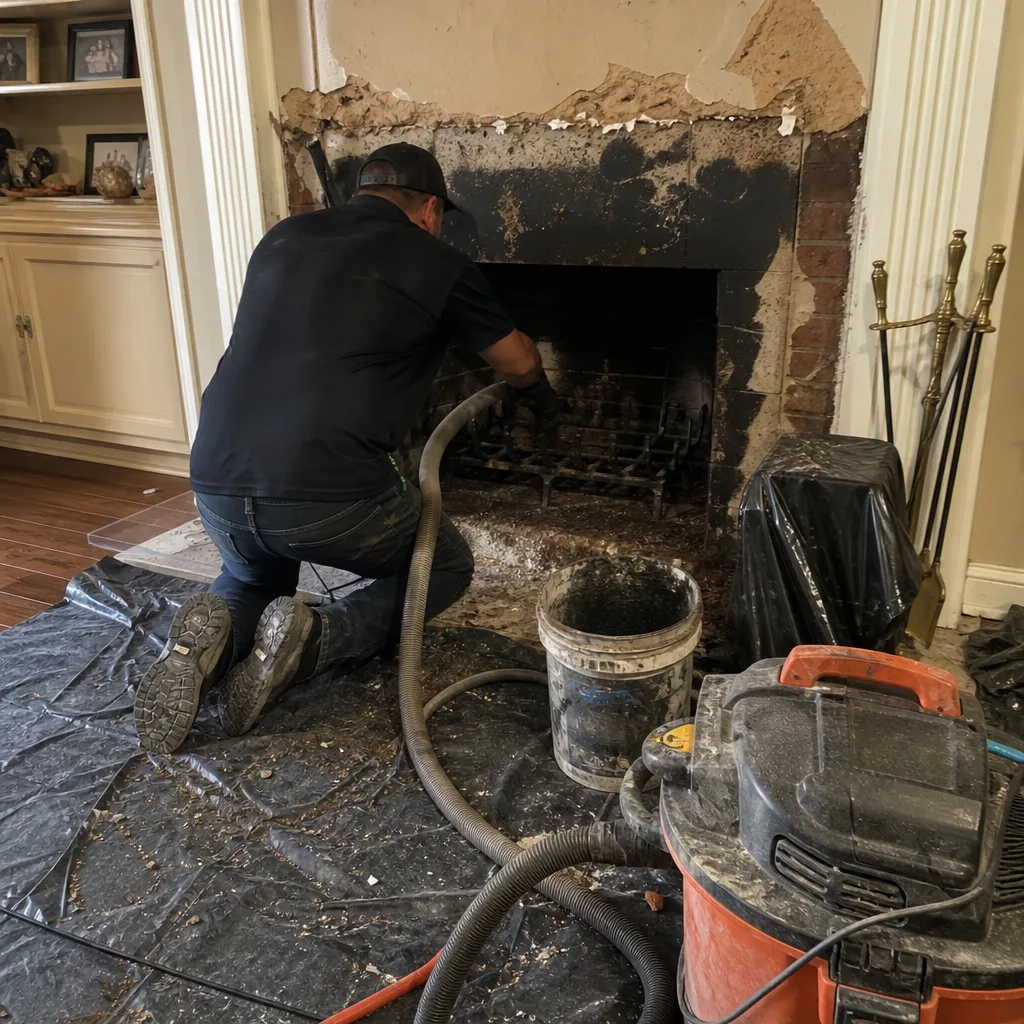
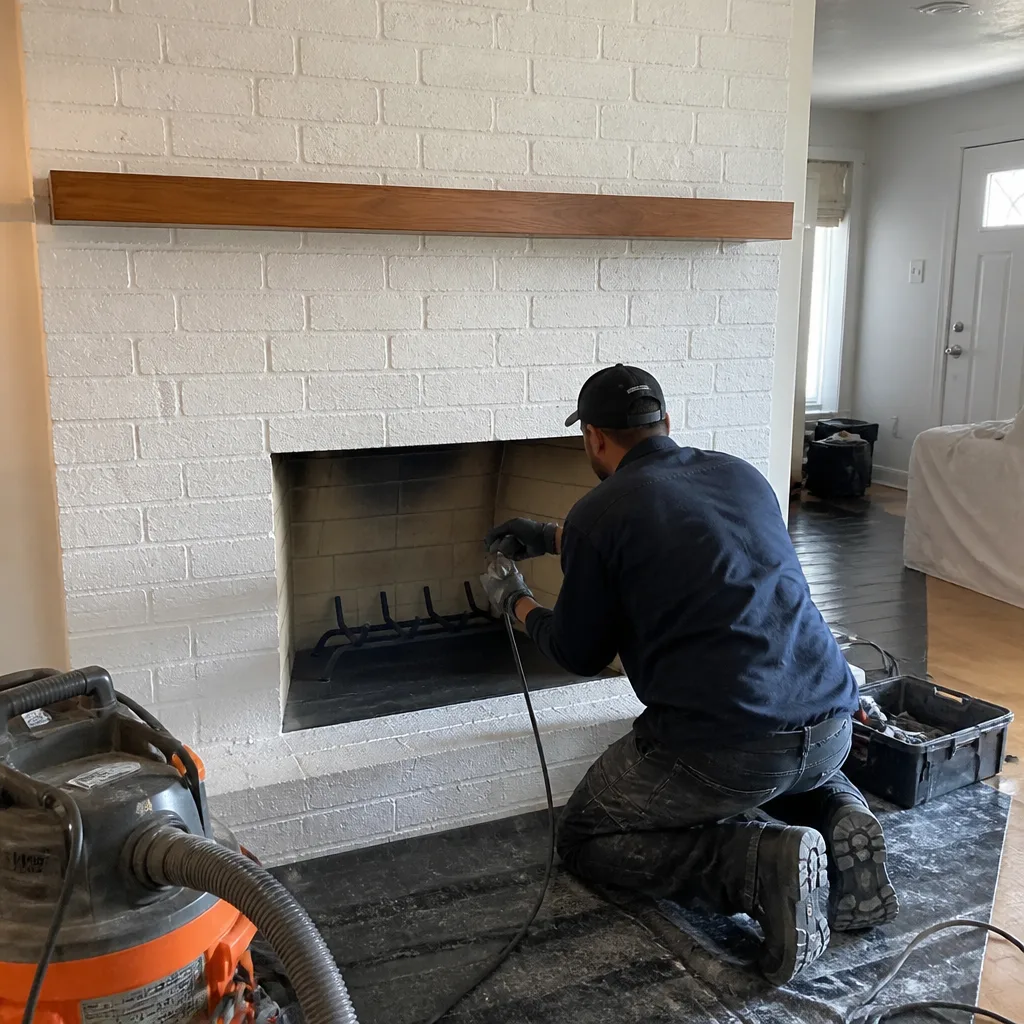
- Cleaning the flue. A legitimate chimney sweep uses brushes sized to the flue, inspection cameras, and techniques to contain dust. Store-bought chimney cleaning logs do not do what a mechanical sweep does and can give false confidence.
- Any repair to the liner, crown, masonry, or cap. These are structural safety components answerable to building codes and fire safety standards. This is not handyman work.
- Diagnosing smoke entry, persistent odor, or draft failure. These have too many possible causes and the wrong diagnosis leaves a fire hazard in place.
How to Describe Symptoms When You Call a Contractor
The single most useful thing you can do before calling a Houston chimney service is know how to describe what you’re seeing in language that helps the technician diagnose before they even arrive. Here’s the language we ask for, and it works with any reputable contractor:
- For smoke entry: “Smoke enters the room [immediately when lit / after 10 minutes / only on mild days / only on cold nights] and [I have / I have not] tried cracking a window near the fireplace. The damper [opens fully / sticks / partially opens].”
- For odor: “The smell is [smoky campfire / musty / dead animal / chemical] and it’s strongest [near the firebox / in the room above the fireplace / outside near the chimney] and it gets worse [when it’s humid / after rain / all the time].”
- For visible buildup: “Shining a flashlight up the flue, I can see [dusty black soot / shiny black glaze / flaky dark material / granular sandy chips] and it’s heaviest [in the first few feet / higher up where I can’t see].”
- For exterior staining: “The white staining is [powdery and brushes off / hard and crusty / comes off with water] and it’s located [near the top of the chimney / along the mortar joints / across the brick faces] and I’ve noticed it [only this year / for several years / worse after storms].”
- For rust: “The rust is on [the damper / the firebox floor / the metal cap / the gas logs] and the damper [operates normally / sticks / is seized] and I’ve noticed water [inside the firebox / on the smoke shelf / in the ash pit].”
- For animal evidence: “I’ve heard [scratching / thumping / bird noises] in [the morning / evening / mostly at night] and there’s [droppings / nesting debris / a dead animal smell] and the chimney has [a cap / no cap / a cap that looks damaged].”
This level of detail separates a 15-minute phone call from a 5-minute guess, and it means the technician arrives with the right equipment for the right problem instead of a generalist toolset and a shrug. It’s also the kind of specific information that settles the scope of work and the written price more quickly.
Common Mistakes to Avoid
- Waiting for the annual rush. Houston chimney service demand peaks in October and November, right before burning season. If you’ve seen a warning sign in July, addressing it in July means shorter scheduling lines and a cleaner resolution. Waiting until the first cold snap means competing with every other homeowner who just discovered their chimney isn’t ready.
- Burning unseasoned wood from a big-box store bundle. If the wood hisses or the fire smolders, you’re not getting a clean burn and you are actively depositing Stage 2 creosote in the flue. Houston’s humidity means even stored wood needs more drying than most people expect.
- Ignoring summer odor as a seasonal nuisance. That smell is a signal. It’s telling you moisture plus residue are doing something in the flue, and the fix is a sweep now, not a Febreze plugin.
- Thinking a “chimney cleaning log” is a substitute for mechanical cleaning. Those products may loosen some Stage 1 creosote, but they don’t remove Stage 2 or 3, they don’t clear animal nests or obstructions, and they give a dangerous false sense of “cleaned.”
- Accepting a verbal price over the phone and then a different verbal price at the door. In Houston, as anywhere, the number on the invoice should be the number you approved. A written quote before work starts is standard practice at any reputable chimney company, and it’s a red flag when it’s not offered.
- Repairing interior water damage without checking the chimney. If you see water staining on the ceiling near the chimney chase, do not repaint and move on. The water came in through the chimney system, and paint covers the symptom, not the entry point.
- Using the fireplace “just one more time” after seeing a warning sign. If the flue is blocked, the fire doesn’t care about your plans. One fire in a blocked flue is a carbon monoxide event.
When to Call a Professional
Call a professional if you see smoke entering the room, dark shiny creosote glazing in the flue, flaking clay or masonry in the firebox, animal evidence anywhere in the chimney, or rust on the damper that you can’t explain. Call if the odor from the fireplace is strong enough to notice when you walk past the room, not just when you put your face near the firebox. Call if efflorescence is hard, crusty, and covers more than a few brick faces, or if any exterior mortar joints are missing material. In Houston, where water drives every chimney problem faster than most of the country, the cost of an inspection is almost always less than the cost of waiting until the problem announces itself structurally. Flint Chimney Co Houston offers free estimates in Houston, including camera inspection with a full report, with written pricing before any work begins. Call (325) 750-6259 to schedule.
Frequently Asked Questions
A standard chimney sweep in Houston runs $189 to $329 for a typical single-flue fireplace, and most Houston chimney companies will include a basic inspection with the sweep. If the flue has heavy Stage 3 creosote, animal nesting, or hasn’t been cleaned in many years, the price can go higher. To get an exact quote for your Houston home, call (325) 750-6259 for a free estimate with written pricing before any work starts.
Houston fireplaces used even occasionally should be swept at least once a year, and heavily-used wood-burning fireplaces may need sweeping every 30 to 50 fires, which some Houston families hit in two or three seasons. If you burn unseasoned wood, or if you smell odor in summer, or if the chimney is uncapped, the need increases. Call (325) 750-6259 and describe your usage pattern, and we’ll tell you straight what your Houston chimney actually needs.
Not if the warning sign is smoke entry, visible dark glazed creosote, flaking firebox material, or animal evidence. Any of those means the flue is not safe to use until it’s been professionally cleaned and inspected. For non-fire-related symptoms like minor efflorescence or light dampness, you can use the fireplace, but the underlying water entry should still be addressed at your next service visit.
A chimney sweep is the physical cleaning of the flue: brushes, vacuum, removal of creosote and debris. A chimney inspection is a structural and safety assessment, usually done with a camera to look for liner damage, blockages, water entry, and fire hazards. In Houston, most companies perform a basic inspection as part of every sweep, but a full camera inspection is a more detailed service. Chimney Inspection in Houston is the service to discuss this with.
Gas fireplaces don’t produce creosote, but they still need periodic inspection because gas combustion produces acidic flue gases and water vapor that can corrode flue liners and metal components over time. Houston’s humidity adds water vapor to the system, which accelerates corrosion. Even gas units should be inspected at least every two years, and annually if the unit is your primary heat source.
A proper chimney sweep uses dust containment: drop cloths, HEPA filtration, and sealed vacuum systems that keep the soot inside the flue area instead of broadcasting it into the living room. We take that seriously at Flint Chimney Co Houston; our techs are uniformed and background-checked, and the area is left as clean as it was on arrival. If a company can’t guarantee dust containment, ask why.
Does homeowners insurance cover chimney repair in Houston?
Most Houston homeowners policies cover sudden, accidental
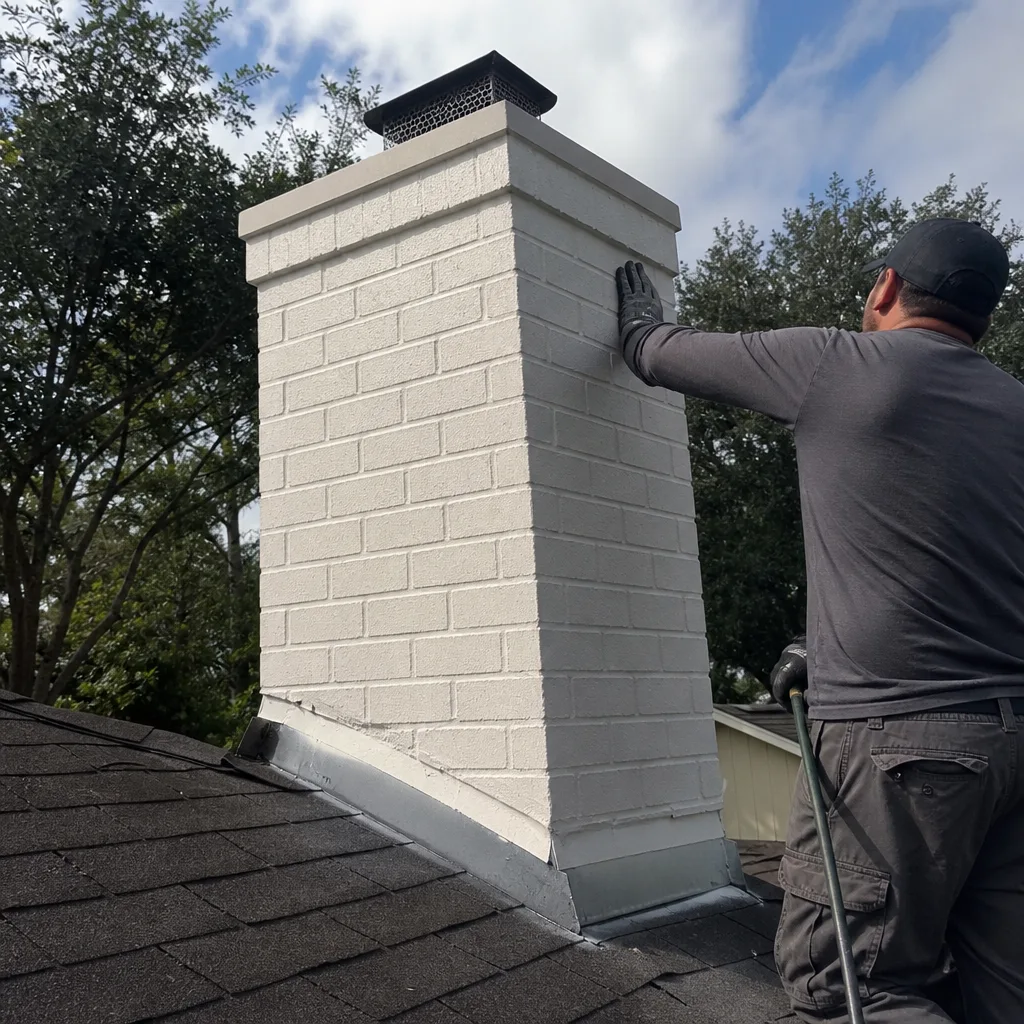
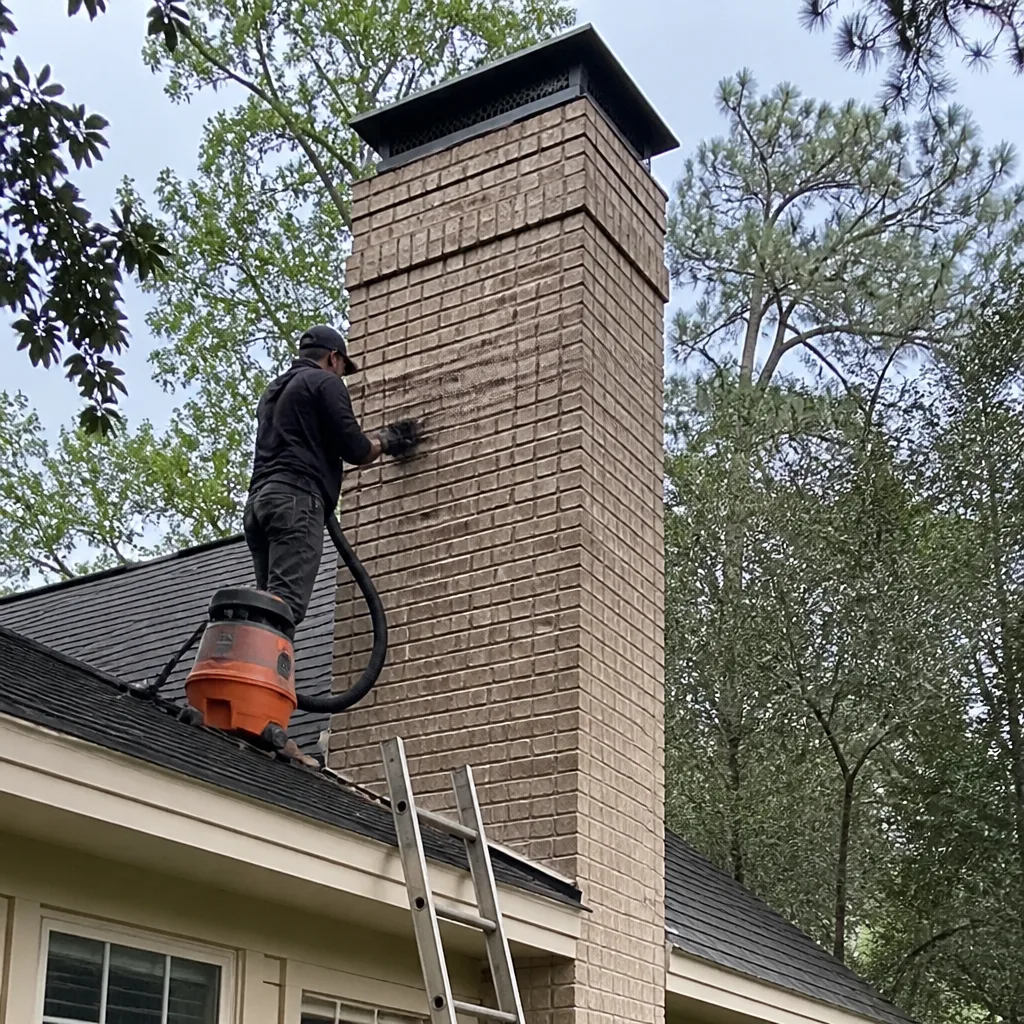
See the difference
 Before
 After
After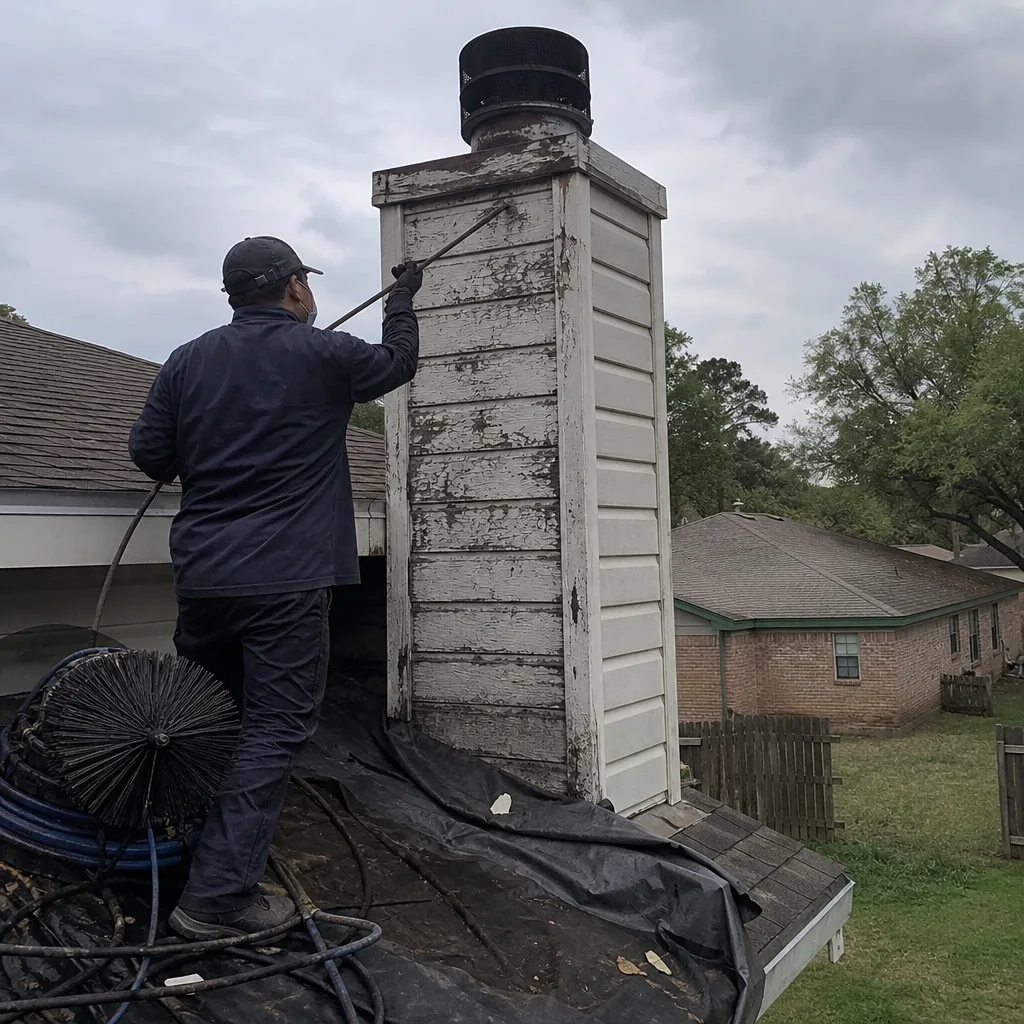 Before
 After
After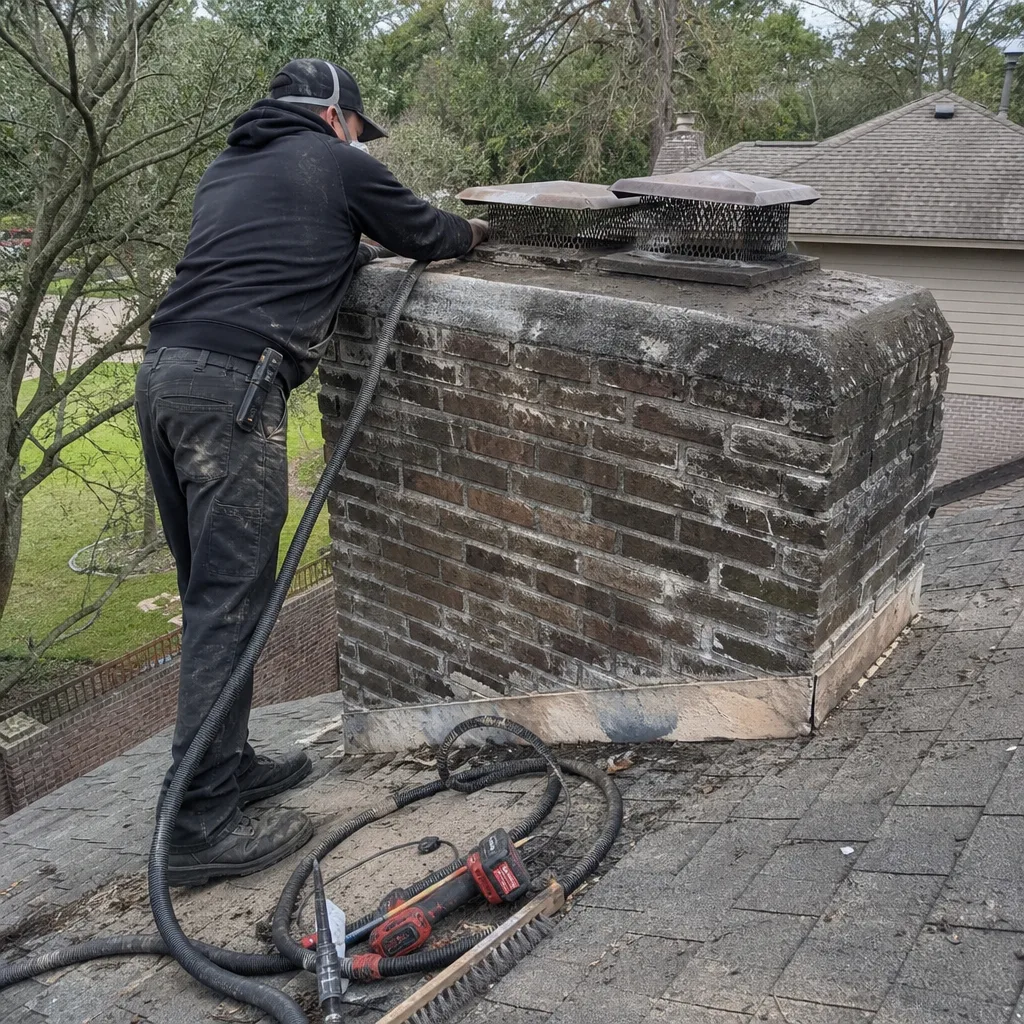 Before
 After
After